A natural smile rarely shows that work was done. A makeover can combine veneers, whitening, and tooth reshaping without overdoing the result by planning every change together, so shade, shape, and size are chosen to suit the face and the other teeth.
Each treatment does a different job. Whitening lifts color, reshaping fine-tunes small edges, and veneers change shape or color more significantly, and a clear plan decides how much of each is truly needed, which a dental evaluation helps establish.
How a Smile Makeover Combines Veneers, Whitening and Tooth Reshaping
A smile makeover is a plan rather than a single procedure. Treatments are chosen and ordered so each one supports the others.
The aim is a smile that suits the patient’s face, lips and personality. Restraint is part of the plan, and not every treatment is needed for every smile.
Which Cosmetic Concerns Are Addressed First
The order matters, because later steps depend on earlier ones. A typical sequence looks like this.
- Whitening sets the color that veneers and bonding will be matched to.
- Clear aligners, when needed, move teeth into position before cosmetic work begins.
- Reshaping, bonding, or veneers are then planned on that corrected foundation.
The dentist adjusts the order to fit the patient’s goals.
How Tooth Shape Influences Reshaping, Bonding or Veneers
Small chips, slightly uneven edges, or minor length differences are often suited to reshaping or bonding, which change very little of the tooth.
Larger differences in shape, size, or color usually lead to dental veneers, which cover the front surface of the tooth. The shape of each tooth guides which option fits.
Why Shade, Translucency and Surface Texture Keep a Result Natural
Natural teeth are slightly translucent at the edges and carry fine texture on the surface. Restorations that copy these details reflect light the way real enamel does.
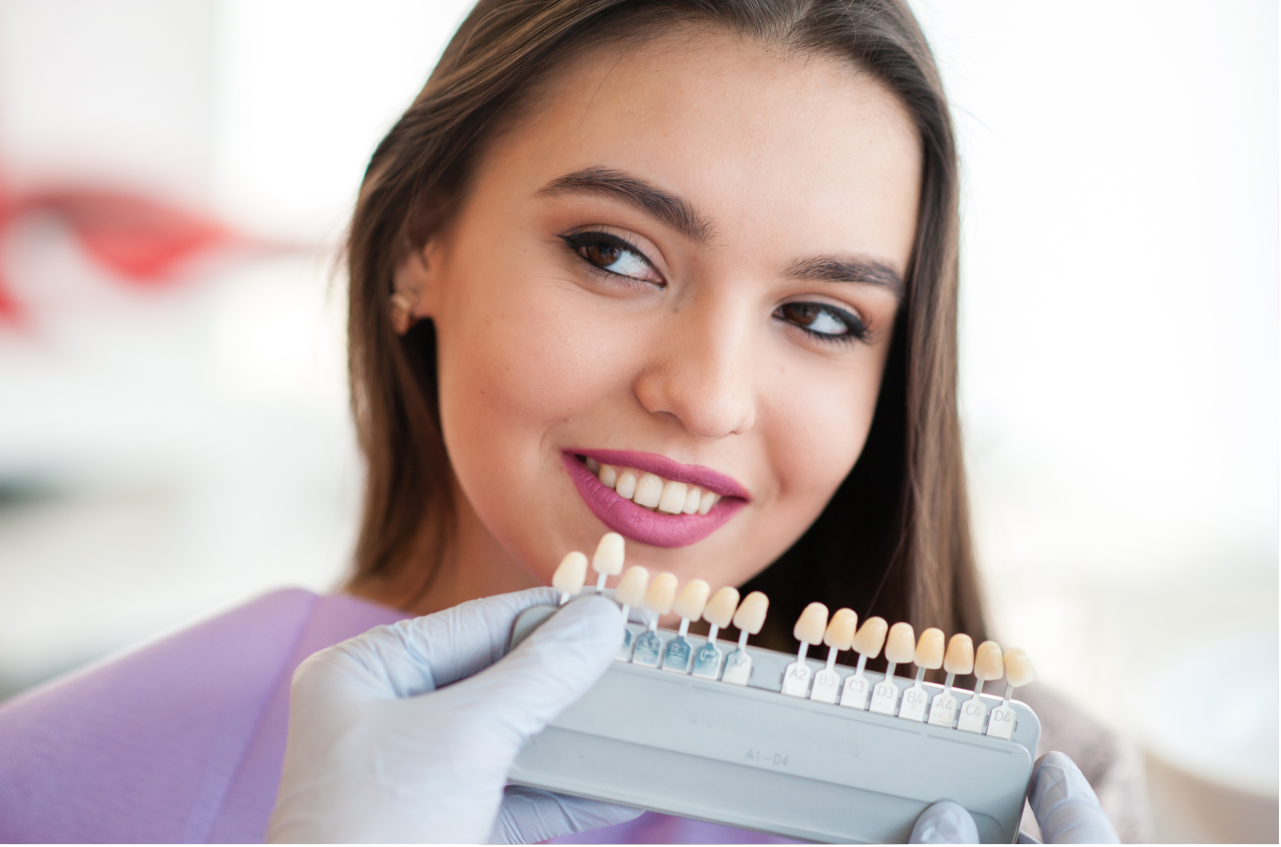
Shade is matched to the whitened teeth and to the neighboring teeth, so veneers do not stand out. Porcelain and composite resin both allow this level of detail.
How Smile Design Keeps a Makeover Balanced
Smile design looks at the face, lips, gums, and teeth together, so changes are proportionate rather than based on the teeth alone.
A 2024 narrative review of smile design describes it as a multidisciplinary process and notes that digital tools help predict outcomes and refine them with patient feedback.
When Gumline Shape Changes the Overall Smile
Gums frame the teeth, so a high or uneven gumline can make teeth look short or crooked even when the teeth themselves are sound.
Whether the gumline is adjusted depends on the patient’s goals and the shape of the gums, and it is planned together with the other cosmetic steps.
Who May Be a Candidate for a Combined Makeover
Patients who want to change color, shape, and alignment at the same time often benefit from a combined plan. Healthy gums and teeth are the starting point, and any decay is treated through restorative dentistry first.
Those who prefer smaller changes can choose a single treatment, such as whitening alone. A dental evaluation helps match the plan to the goal.
How Follow-Up Care Protects a Makeover
Brushing, flossing, and regular preventive visits keep veneers and natural teeth healthy. Whitened shades fade gradually with coffee, tea, and tobacco, so touch-ups can be discussed at follow-up visits.
Those visits also check the edges of veneers and the health of the gums, so small issues are corrected early.
Smile Makeovers at Philadelphia Dental Smiles
At Philadelphia Dental Smiles in Northeast Philadelphia, PA, Dr. Dilip Dudhat and Dr. Mahad Shamsi offer smile makeovers that combine veneers, ClearCorrect or Invisalign aligners, and teeth whitening. Digital impressions, intraoral cameras, and a 3D scanner support planning.
Laughing gas sedation is available for patients who feel uneasy, and the office serves Holmesburg, Mayfair, Torresdale, and Bensalem. Patients are welcome to ask how cosmetic dentistry in Philadelphia could be planned around their own smile.
Smile Makeover Questions in Philadelphia, PA
A balanced makeover starts with a plan that measures each change against the whole smile. Philadelphia Dental Smiles welcomes questions about cosmetic dentistry from patients in Northeast Philadelphia and Bensalem.
Frequently Asked Questions
What role does the bite play in planning changes to front teeth?
The bite decides how much force the front teeth carry, which affects the length, thickness, and material chosen for veneers or bonding. Changes are planned so the teeth meet comfortably and the restorations are protected.
What can a digital smile preview show before treatment begins?
A digital preview can show how new shapes, lengths, and shades might look against the face and lips. It gives patients a chance to react and request changes before any treatment starts.
Is tooth reshaping permanent?
Yes, because a small amount of enamel is removed and enamel does not grow back. For that reason, reshaping is kept to small adjustments and is planned carefully before it begins.
How long does a smile makeover take?
Timing depends on which treatments are included. Whitening and reshaping can be quick, while veneers involve design and fitting steps, and the dentist outlines a timeline once the plan is set.